Grants in Action: Only One You at Suquamish Elementary
- Feb 20
- 3 min read
Where story, art, and student leadership came together.

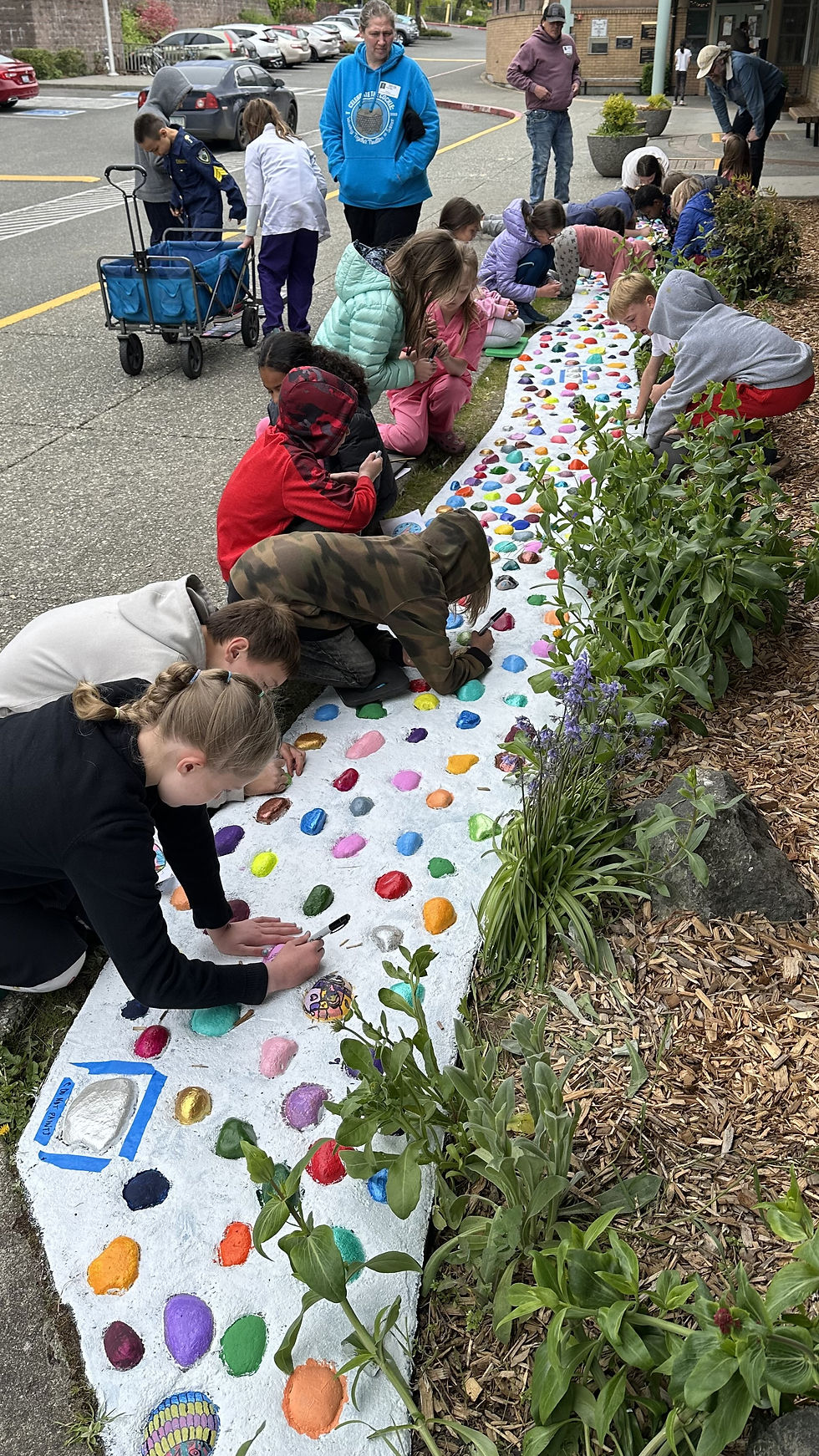
At Suquamish Elementary School, the rock river has long been part of the campus—something students pass on their way to class, something that quietly belongs to the place. This year, it was refreshed through a project inspired by the book Only One You, giving students an opportunity to engage with that familiar space in a new way.
The project was led by third-grade teacher Misty Hernandez, who submitted the grant with a clear goal: to use art, storytelling, and shared participation to strengthen connections across the school community. With support from the North Kitsap Schools Foundation, art supplies were provided to update and restore the rock river.
More than 300 students participated throughout the project, from PreK through 5th grade. Former Suquamish students also returned to participate, some now in high school or college, adding to the sense that this was a shared effort across time, not just grade levels.

A Common Starting Point
Before painting began, students spent time with Only One You, a story centered on individuality, contribution, and awareness of others. The book offered a clear framework for the project: each person brings something different, and those differences matter when they come together.
Students carried that idea with them as they painted. Each rock was approached individually, with students making their own choices about color, design, and message. Once placed in the river, those individual pieces became part of a larger whole, distinct but connected.
Student Leadership in Practice
Third-grade students played a central role in bringing the project to life. Guided by Hernandez, they visited classrooms to explain the purpose of the river refresh, read the book aloud, and invite participation. For some students, this meant stepping into unfamiliar territory: reading to groups, speaking in front of peers, or leading discussions.
Teachers across the school observed growth that extended beyond the project itself. Students who often hesitated to read aloud volunteered to do so. Others who were typically quiet found confidence in presenting. These moments were not staged or scripted; they developed organically as students took ownership of the work.
What Students Took Away
After the project, students reflected on their experience. Many focused on how it made them feel and what they hoped others would notice:
“It made me feel proud.”
“It helps people remember that they belong.”
“I was nervous, but I felt better after.”
“There is no one else like you.”
Their reflections echoed the project's central message without restating it directly, suggesting that the ideas had been absorbed through experience rather than instruction alone.

Learning Through the Process
As with any hands-on project, there were challenges. Some materials didn’t work as expected, and painting outdoors required adjustments along the way. Those moments became opportunities for problem-solving and persistence, reinforcing that learning often happens in the process, not just the outcome.
Rather than disrupting the project, they became part of it.

A Lasting Presence on Campus
Today, the refreshed Rock River continues to wind through Suquamish Elementary. Students pass it daily. Some point out the rocks they painted. Others simply notice it as part of the school environment; familiar, steady, and shared.
The river doesn’t explain itself. It doesn’t need to. Its presence reflects the work behind it: many individuals contributing something of their own, together shaping a space that belongs to everyone.
Grants in Action
This project is a clear example of NKSF Grants in Action, supporting meaningful, student-centered experiences rooted in participation and connection. Led by a classroom teacher and carried forward by students, it demonstrates how small investments can create lasting impact when they are grounded in purpose and community.
At Suquamish Elementary, the river remains—quietly carrying those contributions forward.


Comments