Grants in Action: How’d You Build It So Tall?
What do you get when you hand a kindergartner a story and a bin of magnets?

First, they read a story called Two Tall Houses, then they build one.
In the STEAM room at Vinland Elementary, kindergarten and first graders pulled out three-dimensional magnetic blocks and set to work building towers as tall as they could. And when they finished, they couldn’t wait to explain exactly how they’d done it. “How’d you build it so tall?” turned out to be the best question in the room.

That’s the kind of learning a North Kitsap Schools Foundation grant made possible for STEAM specialist Terra Ezell, who teaches every K-5 student at Vinland. The grant stocked her lessons with the hands-on materials and supplies that bring science, technology, engineering, art, and math to life.
Here’s what makes her role special: as the school’s STEAM specialist, Terra reaches all 550 students in the building. One grant, one cart of well-chosen supplies, and every child at Vinland gets a turn to create.

And the approach works because it doesn’t feel like a lesson. Terra weaves more than one STEAM skill into a single hands-on project, so a story becomes an engineering challenge, and a pile of magnetic blocks becomes a lesson in balance, planning, and problem-solving. The kids think they’re playing. They’re meeting art, science, and math standards across K-5.
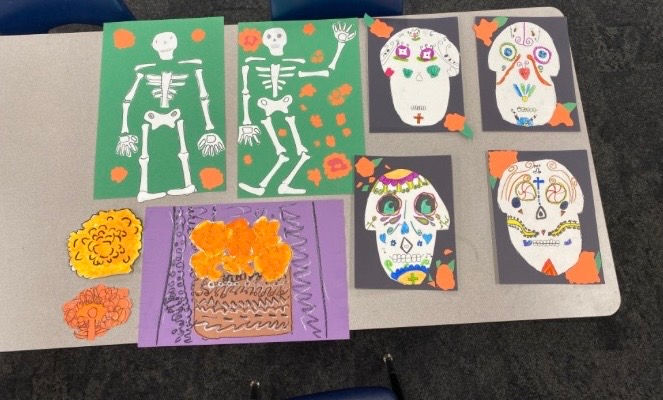
That’s the quiet genius of a well-built STEAM lesson. When a child is excited to explain how they made their tower stand, they’re not just proud; they’re thinking like an engineer. They’re learning that their ideas can take shape in the real world, and that a good problem is fun to solve.
These materials will keep serving Vinland students for years, one project, one experiment, one impossibly tall tower at a time.

And that’s the heart of it. A single grant put creativity into the hands of every student in the school, and gave them room to build, test, and discover what they’re capable of. A kindergartner stacked blocks into something taller than they thought they could, then turned around beaming to show a friend. That is what support looks like up close.


Comments